
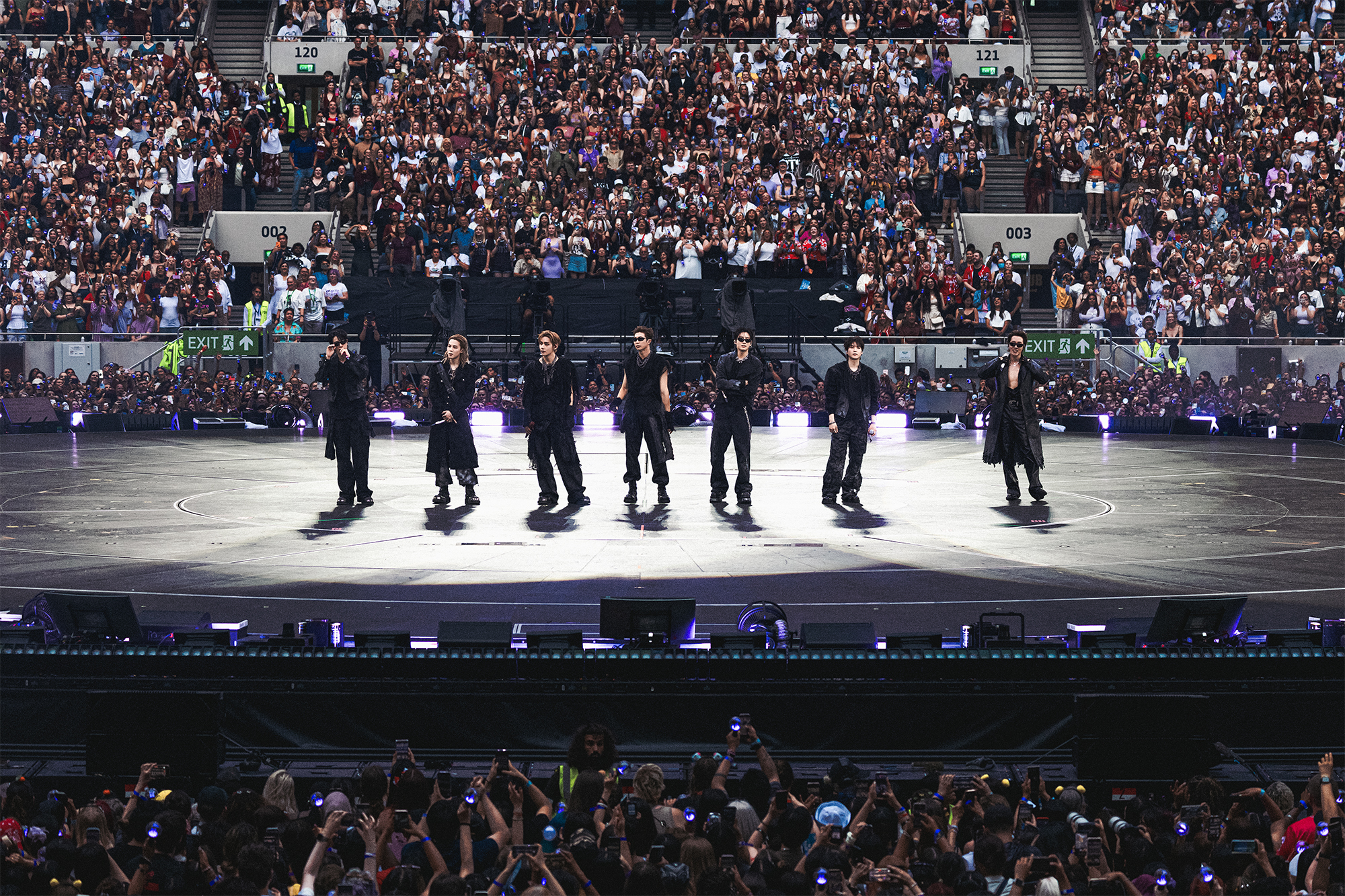
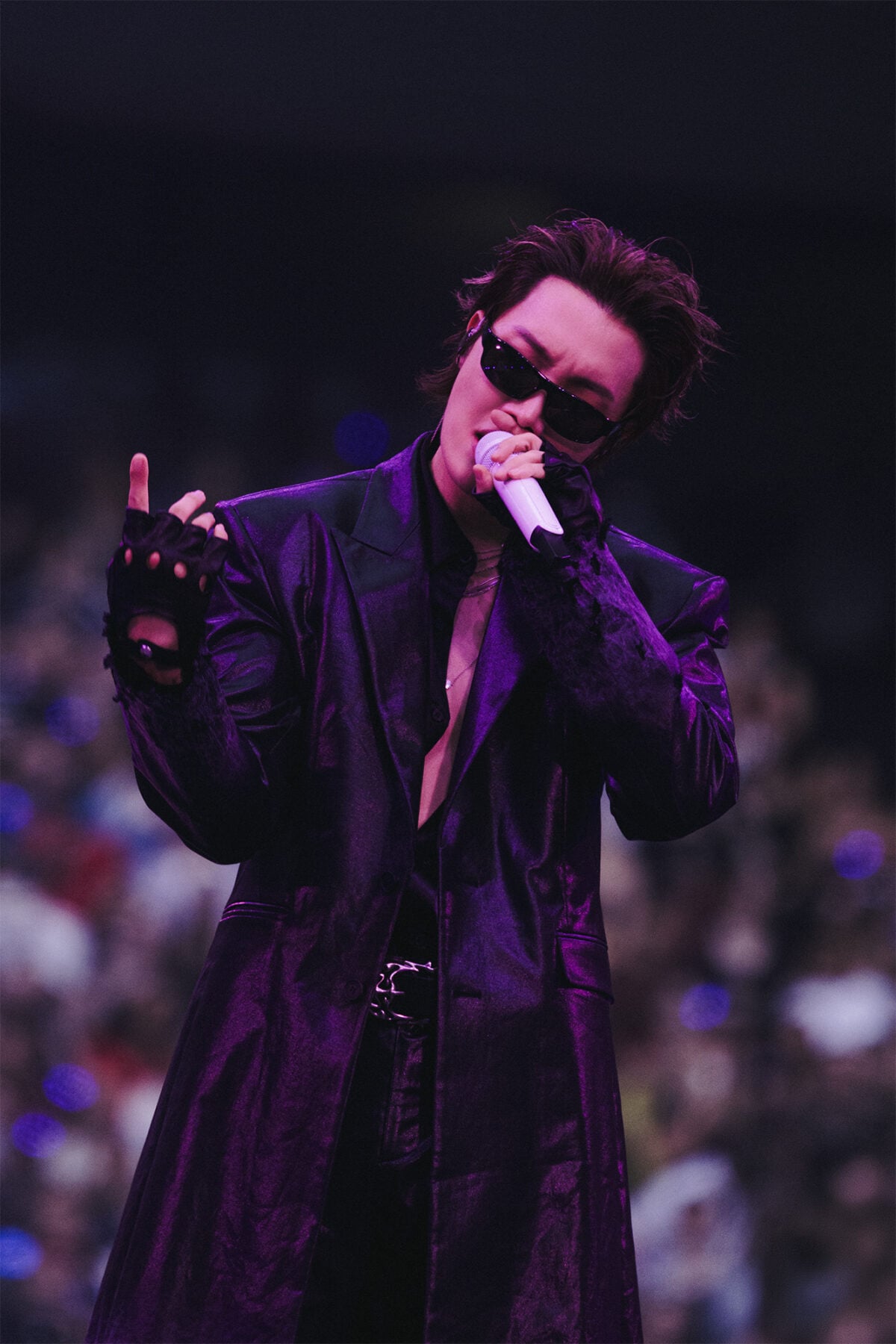
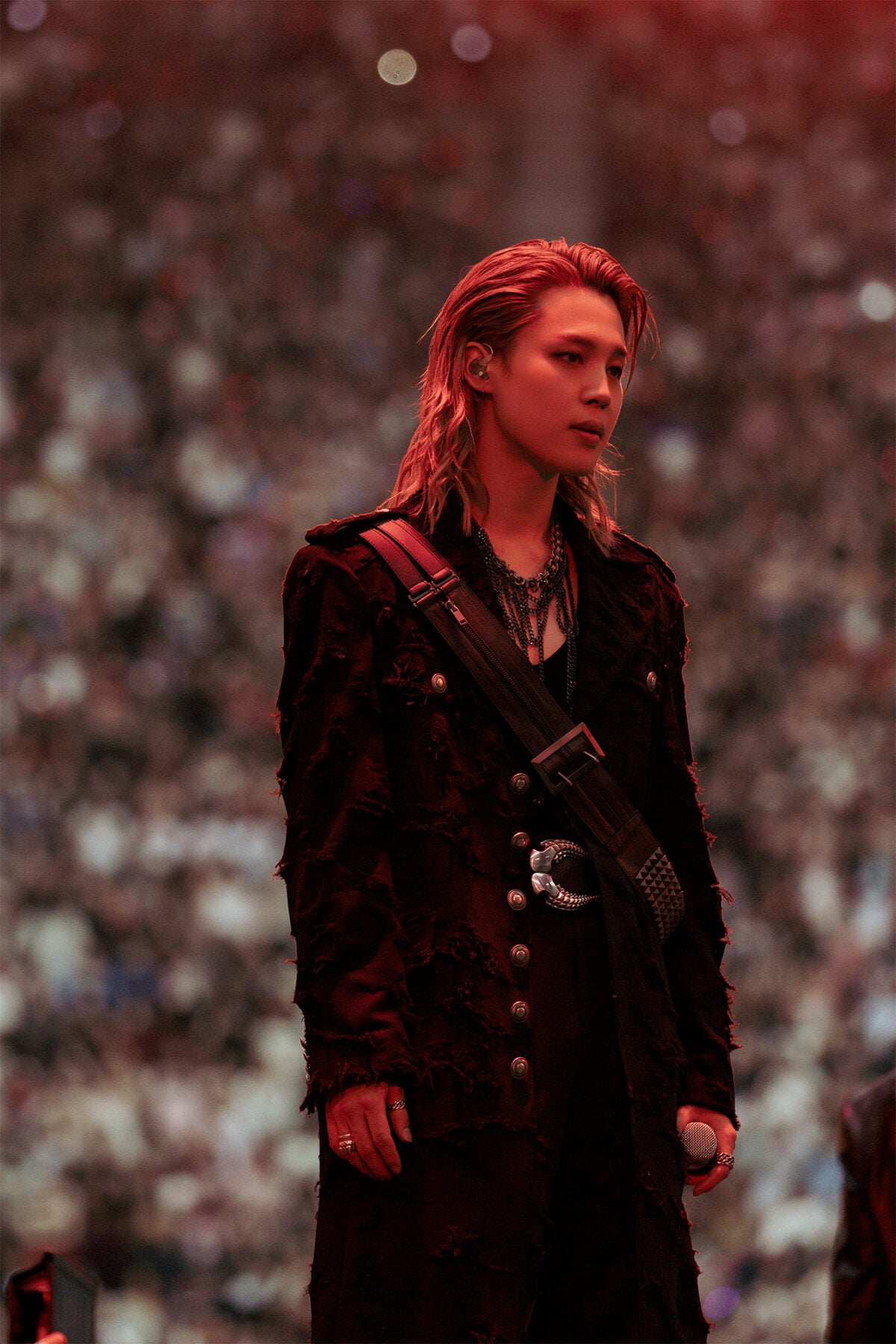
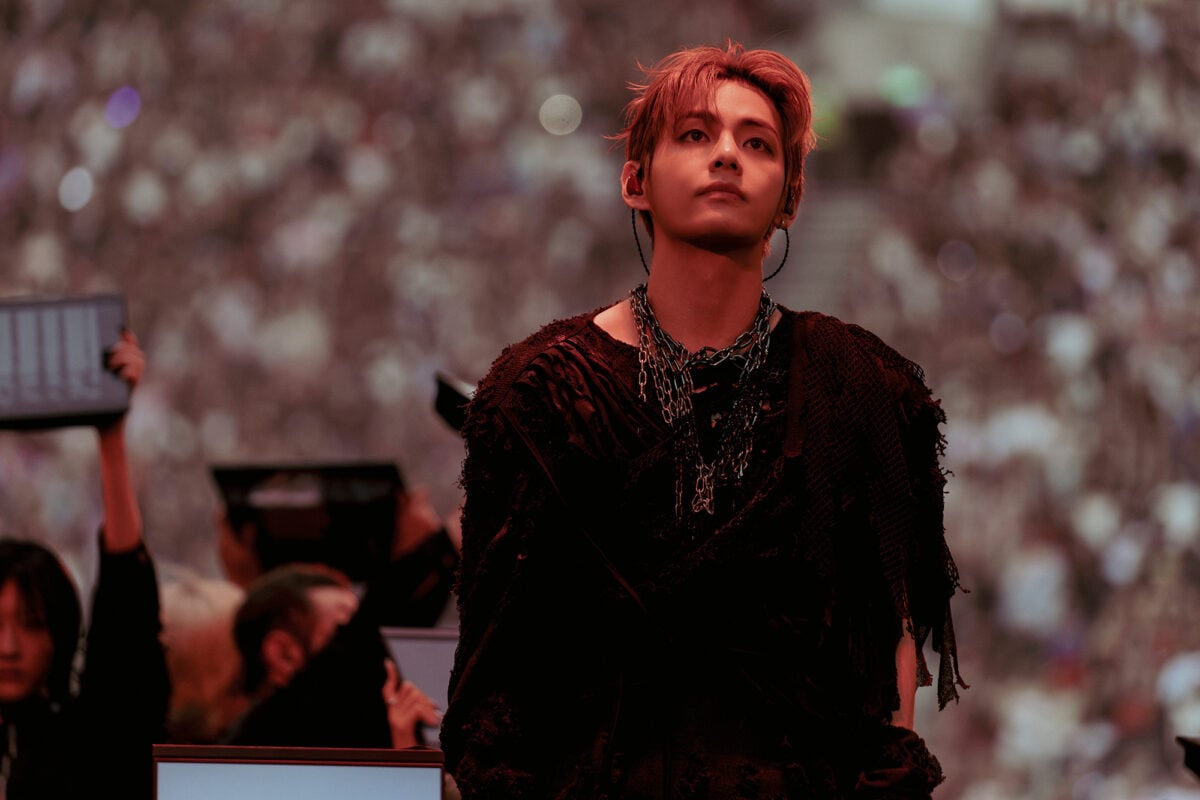
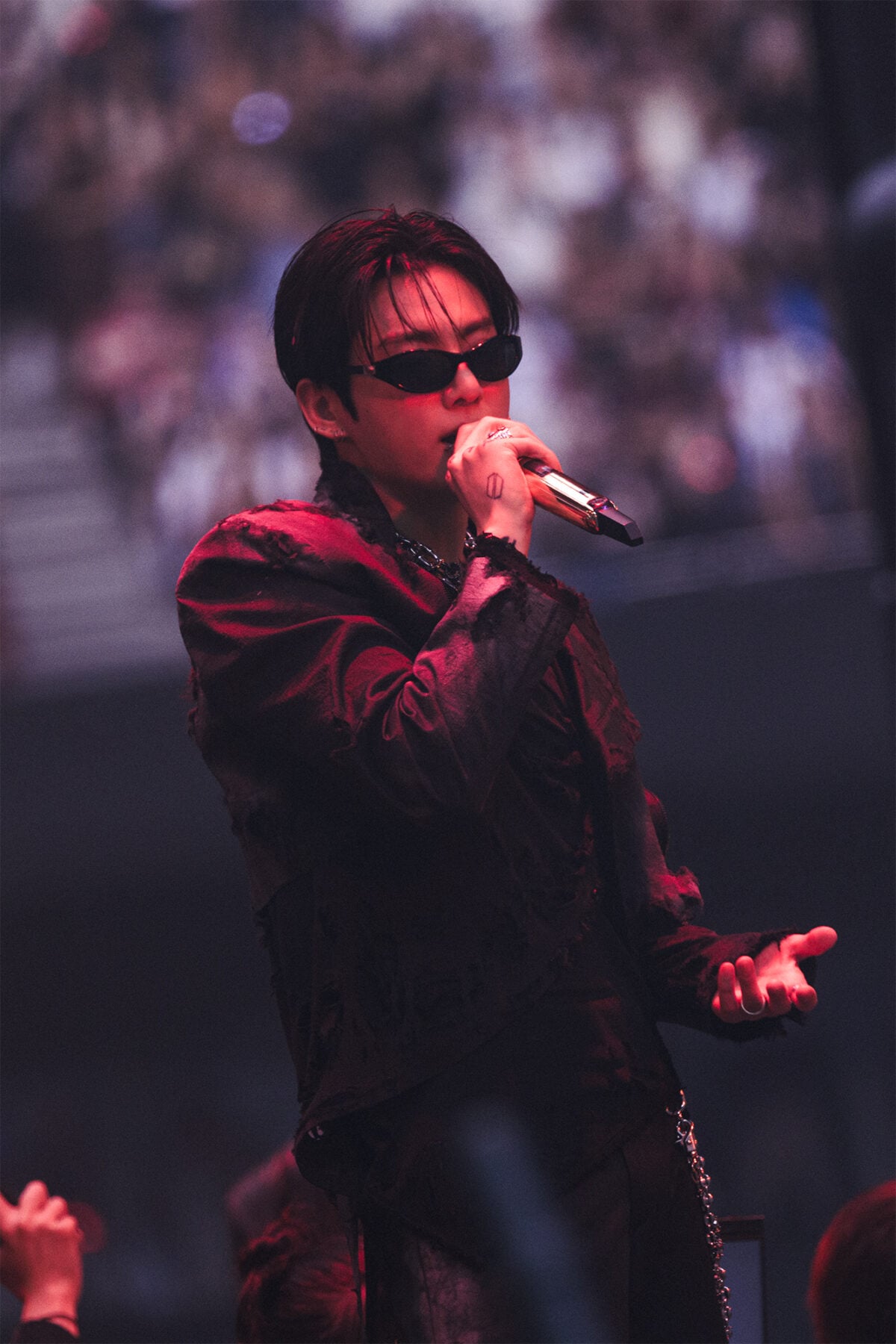
BTS 2.0 is real. It is no longer a formula, nor a promise entrusted to the language of press releases: it is something that takes shape on stage, after their return to the public in the heart of Seoul, at Gwanghwamun Square, and before the more than 60,000 people filling Tottenham Hotspur Stadium on the first London night of the tour. Panorama was there for Day 1, to witness the new chapter of the group that, more than any other, has transformed South Korean pop into a global language, capable of crossing generations, countries and cultural imaginations.
Inside Arirang, however, there is a sound that carries the weight of history. It is the sound of “No. 29”, a track built around the sonic memory of the Sacred Bell of Great King Seongdeok, Korea’s National Treasure No. 29, preserved at the Gyeongju National Museum. That tolling bell, carried in spirit from the museum to the stadium, from ancient Korea to the heart of London, is the most precise key to understanding BTS’ new chapter. More than the pyrotechnics, more than the roar of the crowd, this is where one has to begin in order to grasp the meaning of Arirang: BTS are not trying to adapt Korea to global pop, but rather bringing global pop inside their own Korean imagination.
For decades, pop exported the West to the rest of the world, imposing language, visual codes, imagery and industrial models. BTS do the opposite: they step onto the largest possible stage without asking Korea to make itself smaller in order to be understood, instead turning their own tradition into a universal language that does not need to be translated in order to be felt. This is not an aesthetic detail, nor an exercise in national identity applied to a global show: it is the grammar of Arirang itself. And this is not a definition invented by fans or by the press, because in HYBE/BIGHIT’s official narrative, Arirang is the chapter that unveils BTS 2.0, a new artistic phase tied to the group’s fifth studio album and built around the members’ Korean identity and their global dimension.
The return to the UK after seven years
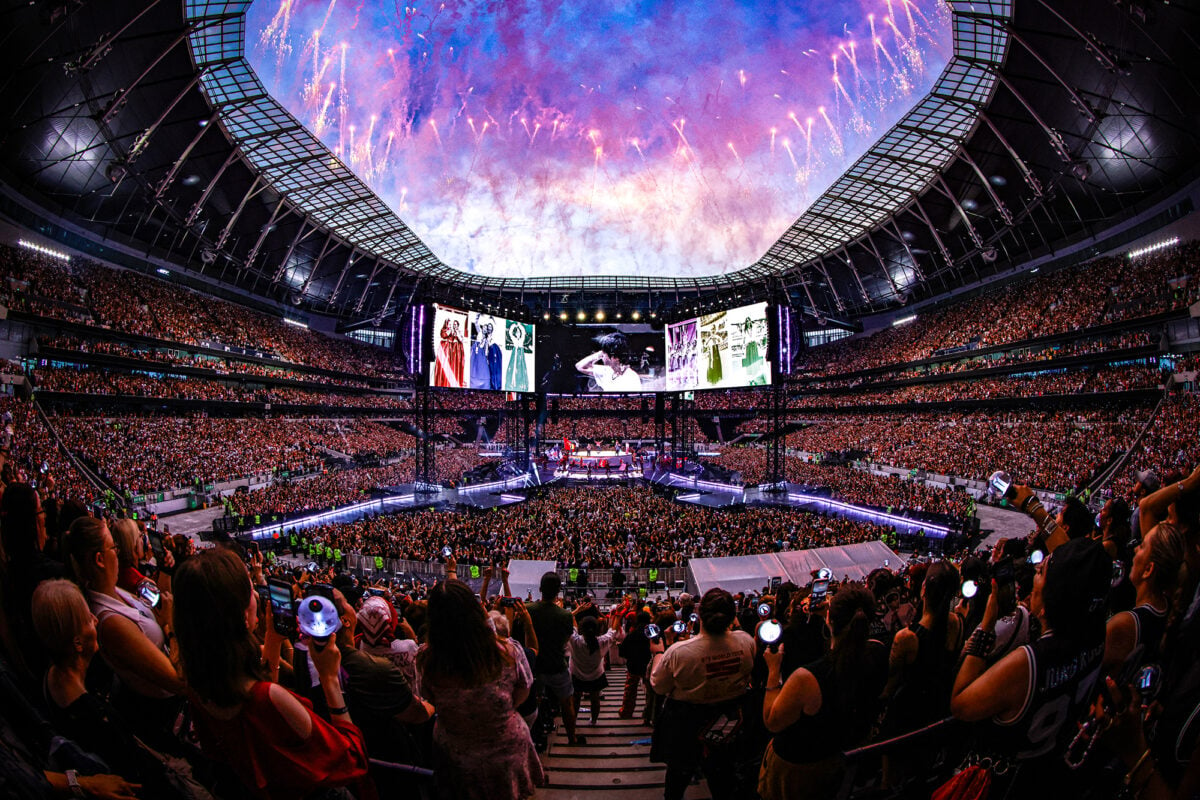
For almost seven years, the United Kingdom waited for BTS to return, and in the meantime everything happened that, in the history of any group that has reached the top, could have become a definitive rupture: first Covid, then military service, solo careers, the distance from group activities, speculation about the future and the inevitable question of what would remain of the original chemistry once the seven were reunited on the same stage. London offers an immediate answer, because Arirang does not have the reassuring shape of a nostalgic reunion, does not try to recreate the years of global conquest and does not treat the catalogue as a personal museum; on the contrary, it uses everything BTS have been in order to build something that looks forward, as if the group had decided not simply to come back “together”, but to come back transformed.
The feeling that Day 1 is not just another date on the tour is already clear outside the stadium, long before the lights go down, as Tottenham begins to change shape and the streets around the venue are crossed by thousands of ARMY arriving from all over Europe and the world. Within the space of a few metres, you hear English, Korean, French, Spanish, Italian, German and Japanese, while the queues move through exchanges of photocards, bracelets, carefully prepared outfits and small gifts handed to perfect strangers as though everyone belonged to the same extended family. There are fans who have followed BTS since 2013, girls who discovered them through Fake Love, parents who entered their universe through their children, adults for whom Dynamite and Butter were the most immediate gateway, and even grandparents watching that purple sea with the same curiosity and involvement as their grandchildren.
This is where the term “boy band” begins to sound inadequate, not because BTS should ever be embarrassed by it, but because it is no longer enough to describe what happens when three generations gather in the same stadium to sing in Korean, when mothers and daughters share the same repertoire, when fathers and sons jump together to MIC Drop, when a rap line born from the experience of a Korean boy becomes a phrase shouted by tens of thousands of people on a London night. Pop royalty today is not measured only in charts or records, but in the ability to create a language that crosses ages, languages and cultural identities without losing its origin, and from that point of view BTS are no longer in the position of those trying to conquer a throne, but of those who inhabit it naturally.
When the lights go down, Tottenham Hotspur Stadium becomes a purple constellation and the fan chant begins even before the seven have fully appeared, with the names Kim Namjoon, Kim Seokjin, Min Yoongi, Jung Hoseok, Park Jimin, Kim Taehyung and Jeon Jungkook being chanted by the entire stadium with a precision that no online video can truly convey. It is not simply a chant, but a form of mutual recognition that belongs to BTS’ history as much as their songs do, because in those seconds the audience is not merely applauding the artist, but declaring its own presence inside the narrative, as if the show could not truly begin until that formula had been spoken by everyone.
How to build the most ambitious pop concert in the world
The first major directorial choice in Arirang is the rejection of a traditional opening. No long introductory VCR, no gradual build-up of anticipation, no spectacular antechamber before the entrance: the show breaks the convention and moves straight into impact, with a crowd already at fever pitch and Kim Namjoon, Kim Seokjin, Min Yoongi, Jung Hoseok, Park Jimin, Kim Taehyung and Jeon Jungkook pulling the audience directly into Hooligan, a track from the new album, as if to make clear that this new era does not begin by asking permission. It is anything but a random decision, because this structure is conceived as a high-impact entrance, able to replace the classic opening VCR and lead immediately into the first performance.
In the opening minutes, Hooligan, Aliens and Run BTS set the temperature almost unbearably high, with the seven occupying the space with a precision that is almost military but never cold, because every movement retains the quality that has made BTS a unique case in contemporary pop performance: complete control of body, voice, stage position and the audience’s attention. The difference, compared with the past, is that this time they no longer look like artists trying to prove they deserve a place in the global market, but seven performers fully aware of their centrality, able to move inside a monumental production without being swallowed by it.
The true intuition of the show, however, is not the quantity of special effects, but the discipline with which every element is used to ensure the story never stops. Arirang does not move like a traditional setlist, made up of blocks separated by technical pauses, stage changes and more or less disguised waiting time, but like a continuous flow in which even the members’ exits are absorbed into the direction through large-scale scenic elements, choreographed transitions and shifts of attention designed to prevent the audience from emotionally leaving the show.
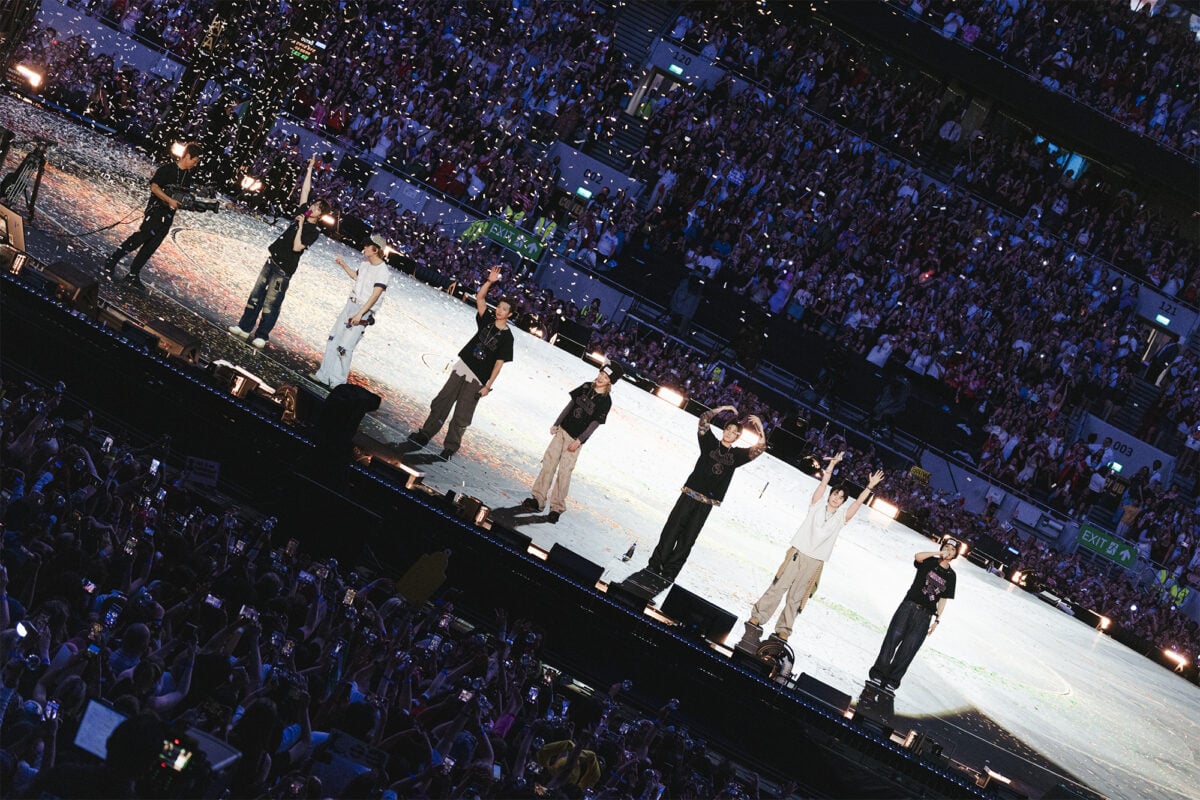
What makes this continuity possible is above all the 360-degree stage, which does not function as a mere spectacular device but as a true piece of narrative architecture. There is no privileged “front” and no back to sacrifice: BTS are forced to constantly change direction, redistribute their gaze, reach every section of the stadium, transforming the very idea of a stadium concert into something closer to a circular performance in which each side of the audience, for a few minutes, has the feeling that the show has been built just for them. The tour presents this set-up as BTS’ first use of a full-scale 360-degree in-the-round stage for a concert, with multidirectional runways designed to reduce the distance between artists and spectators and transform the stadium into one shared set.
This is where Korea enters, and not as ornament. The central stage is inspired by the jeongja, the traditional Korean pavilion, with a reference to the Gyeonghoeru Pavilion at Gyeongbokgung Palace, while the floor incorporates visual elements linked to the Taegeukgi and its four trigrams, turning the stage space into a structure that does not merely “represent” Korea, but translates it into pop architecture.
That is the deepest difference between a folkloric reference and a mature cultural language. BTS do not use Korean tradition as an exotic backdrop designed to impress Western audiences, but treat it as Queen treated a certain idea of British royalty, or Bruce Springsteen the American imagination: not as decoration, but as identity material from which an artistic vision is born. Traditional Korean music, textures inspired by hanji paper, references to the Taegeuk, to Yin and Yang, to the elements of the flag and to the symbols of connection present in the VCRs are not explained didactically, but left to act as a visual grammar that the spectator feels even when they do not know all the codes.
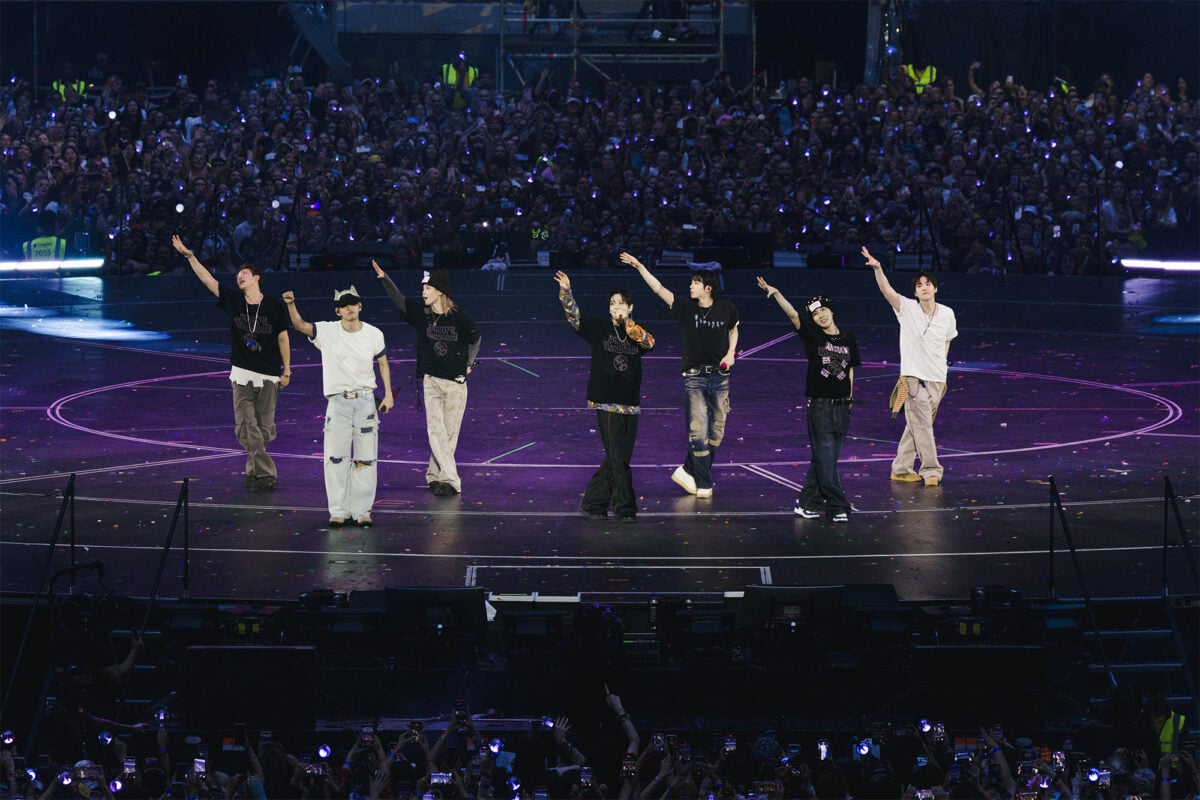
When the stadium becomes the stage
The first moment in which this direction becomes physically visible arrives with SWIM, when the temperature of the show shifts and the stadium suddenly seems to breathe differently. Enormous sheets of fabric move slowly through Tottenham Hotspur Stadium like waves pushed by the wind, forcing the audience for a few minutes to look not only at the stage but at the space above their heads, as if the sports venue had been transformed into an artificial sea in which BTS appear and disappear within the movement of the water. It is a scene of rare elegance, but what makes it truly intelligent is its hidden function: those waves are not there only to create a visual suggestion, but to accompany the transition into Merry Go Round and allow the members to leave the scene without the story losing continuity.
If SWIM is the poetic tableau of the show, IDOL is its ceremonial one. At that point, the stage is no longer enough, because the performance expands onto the stadium track with a grand parade of fifty dancers, monumental flags and LED ribbons crossing the space like a contemporary procession. Seen in London, the image inevitably creates a short circuit with the British visual grammar of pomp and pageantry, with grand parades, public ceremonies and the very idea of collective solemnity, but BTS absorb that code and return it through their own language, transforming IDOL into an identity-driven celebration that belongs to Korea and to global pop at the same time.
It is one of the most important passages in the concert because it shows how Arirang does not simply aim to display the scale of the production, but to redraw the space of the stadium. The track, which would normally remain an empty space between stage and stands, becomes part of the show; the dancers do not fill an interlude, but expand the scene until it coincides with the entire venue; the audience is no longer looking at a distant centre, but is surrounded by the performance, as if the celebration were passing alongside them and absorbing them into its movement.
For more than two and a half hours, BTS do something that very few contemporary artists are still able to do: they turn a stadium into a theatre, alternating monumental tableaux and tiny details, moments of absolute control and sudden emotional openings, sections in which the direction dominates every second and others in which a single joke from RM is enough to dissolve the tension. “Guys, you’ve become even sexier than seven years ago,” Namjoon says, looking out at the London crowd and laughing before the stadium has even finished reacting, and in that line, light only on the surface, there is all the familiarity of a relationship that does not need to be rebuilt because it was never truly interrupted.
Fake Love no longer belongs only to BTS
Then the first notes of Fake Love arrive, and the concert changes nature once again. This is not simply the return of one of the most important songs in their discography, but one of those moments in which the audience takes possession of the song and gives it back to the artists with an almost physical force. The floor really does vibrate, the roar covers the opening of the track for a few seconds, the voices overlap with the microphones and the 360-degree stage seems to breathe inside a sea of ARMY Bombs moving in unison.
In that moment, it becomes clear that Fake Love has long since stopped being just a 2018 hit. It has become one of those songs that no longer belongs exclusively to its creators, because every concert adds a new memory to it, every generation of fans gives it a different meaning and every stadium turns it into a collective experience. There is no need to say that it is a generational anthem: you only have to hear how London sings it, how London shouts it, how London makes it vibrate beneath your feet.
With MIC Drop, the energy shifts again, becoming sharper, more provocative, closer to the group’s rap roots. When Suga delivers the famous “mianhae, omma” — literally, “sorry, Mum” — the entire stadium completes the line with astonishing ease, as if those words had already entered the emotional vocabulary of a global community. That fragment, born as a personal and artistic act of vindication, is now shouted by European, American, Asian, teenage and adult fans, demonstrating better than any argument that language, in BTS’ case, is no longer a barrier but part of the very fascination of the bond.
This is where the cross-generational nature of K-pop becomes tangible. Not because the audience is “diverse” in some generic sense, but because the same chorus is sung by people at different stages of life, many of whom encountered BTS at different moments in their story. Mothers know Fake Love because they listened to it with their daughters; daughters know Butter because they danced to it during the pandemic; longtime fans recognise the urgency of MIC Drop; younger fans enter the new Arirang universe without perceiving it as a rupture. This is the point at which the repertoire stops belonging to an age group and starts behaving like the great pop catalogues do: it crosses time, instead of chasing it.
When perfection makes room for the seven boys
Arirang would be a less powerful show if it remained trapped inside monumentality, because its strength lies precisely in its ability to alternate the grandeur of the machine with moments in which perfection cracks just enough to reveal something more human. After the surgical precision of the first part, after the millimetric direction of SWIM and the parade of IDOL, a lightness arrives that does not feel programmed and, for that very reason, becomes necessary.
Jin climbing onto Jungkook’s back as the audience laughs, Jungkook running with bottles of water to tease Jin and V, the glances between the members, the improvised jokes, the freedom with which they move through the final part of the show are small details only on the surface. In reality, they reveal one of the most important aspects of this return: BTS no longer look like seven artists trying to prove they can conquer the world, but like seven people who, having already done so, are rediscovering the almost childlike pleasure of being together on the same stage.
It is a subtle but decisive difference. The first phase of their career was driven by the urgency of conquest, by the need to overcome barriers, prejudices, markets, charts and categories built by others. Today that tension has not disappeared, but it has turned into control, serenity and self-knowledge. BTS have not lost their hunger, but they no longer seem forced to prove it every second, and that freedom makes their stage presence feel even more natural.
Life Goes On, when London returns the wait
After more than two hours of show, Life Goes On changes the emotional temperature of the stadium. It is not just any song in BTS’ history, because it was born during the pandemic and represented, for millions of people, the possibility of imagining continuity while the world seemed to have stopped. Hearing it in London, after years away from the British audience and after the pause imposed by military service, gives it a new meaning.
During the song, London ARMY raise the banner prepared for the group: “We’ll always love you like we did before.” Inside that sentence is everything the concert does not need to explain: the waiting, the loyalty, the fear that time might have changed something and the simple, devastating answer that nothing has broken. RM smiles and thanks the audience with a “Thank you, ARMYs. You are so sweet,” j-hope repeats “So lovely,” and V replies, “We will always love you,” turning the fans’ gesture into an exchange that feels more like a private conversation than a stadium moment.
This is where Jimin becomes emotional. There is no need to load the scene with rhetoric, because it is enough to observe it: he looks out at the sea of lights in front of him, listens to the stadium singing, lifts a hand to his face, wipes his eyes almost shyly and resumes the performance. It lasts only a few seconds, but it is one of the moments that will remain, because inside the perfect machine of Arirang, between stage architecture, invisible transitions, Korean symbols and fireworks, the emotional centre is always the same: seven artists and an audience that kept waiting for them.
The toll that remains
When the lights of Tottenham Hotspur Stadium come back on and the stadium slowly becomes a stadium again, with ARMY Bombs switching off one by one, the crowd flowing towards the Underground and the technicians already beginning to dismantle what, only minutes earlier, had seemed impossible to imagine anywhere else, what remains above all is a sound. Not the fireworks, not the screams, not even the most famous songs, but the toll of “No. 29”, the bell that runs through Arirang and binds BTS’ entire new path together like an indissoluble thread.
Only at the end does it become clear why that sonic reference mattered so much: it was not there to decorate the story, but to point its direction. Arirang proves that the group has not returned to repeat what had already worked, but to build a new form in which Korean tradition is not adapted to global pop, but placed at the centre of one of the most ambitious contemporary pop shows.
Royalty in music is not a title one can simply claim, nor does it depend only on numbers, sold-outs or charts, because it is recognised by time, by the ability to influence an entire generation, to build a repertoire that crosses ages and to turn one’s own culture into a universal language without distorting it. In London, before a stadium singing in Korean from beginning to end, BTS did not claim that role: they simply inhabited it.