

La rivincita dei gruppi italiani dopo decenni di predominio francese?
L’Annus Horribilis
Ormai ci sono pochi dubbi. Il 2025 verrà ricordato come un annus horribilis della storia contemporanea. La perdurante impotenza – anche della nuova amministrazione USA – ad arrestare i conflitti in Medio Oriente ed in Ucraina e le strazianti tragedie umanitarie che ad essi si accompagnano. I sinistri bagliori dei missili che riempiono di morte e distruzione i cieli fra Tel Aviv e Teheran. Le guerre commerciali USA che continuano ad erigere barriere daziarie gettando incertezza e smarrimento sui mercati finanziari e fra investitori, imprese, risparmiatori e consumatori. Le deportazioni organizzate di immigrati illegali, o presunti tali, in catene verso i campi di concentramenti dei tempi moderni presidiati da reticolati, guardie mascherate e persino coccodrilli. La corsa al riarmo che drena risorse dai settori della solidarietà e dello sviluppo: sanità, welfare, istruzione. Tutti eventi gravissimi e senza veri precedenti nella storia contemporanea recente che stanno marcando pesantemente questo 2025.
Il Crepuscolo degli Dei
Anche il nostro relativamente piccolo mondo della moda sta vivendo un 2025 caratterizzato da un vero e proprio crepuscolo degli dei. Il da sempre primo della classe LVMH Fashion ha postato un declino del fatturato del 5% nel primo trimestre 2025. L’iconico Chanel ha annunciato nel 2025 risultati 2024 marcati da una contrazione del fatturato pari al 4,3% e da uno scivolone dell’utile operativo pari al 28,2%. Per non parlare dei grandi malati della moda mondiale, Gucci e la sua casa madre Kering, la quale ha inanellato, al 31 marzo 2025, l’ennesimo trimestre negativo con un declino del fatturato consolidato di Gruppo like for like del 14% ed un performance del titolo che al 24 aprile 2025 (dopo l’annuncio dei risultati del primo trimestre) era a 173 Euro contro il massimo di 798 Euro raggiungo nell’agosto 2021. Sic transit gloria mundi. Ma non basta. Dopo ben vent’anni alla guida del Gruppo, il rappresentante del socio di riferimento François-Henri Pinault ha dovuto rinunciare alla carica di amministratore delegato per chiamare un manager esterno di altissimo calibro, Luca De Meo, a gestire le sfide di un futuro incerto e denso di scelte difficili. E, ancora, la bufera delle misure di prevenzione disposte su richiesta della Procura della Repubblica di Milano che, sempre nel 2025, hanno gettato un’ombra sulla reputazione di due icone mondiali della sartoria italiana, Valentino e Loro Piana, accusate di “agevolare colposamente” fenomeni di sfruttamento di manodopera cinese spesso clandestina per il tramite di fornitori primari delle maison sprovvisti delle necessarie strutture produttive.
Per la Prima Volta in Venti Anni Brillano Più Forte le Stelle Italiane
In breve un armageddon nell’olimpo del lusso che scuote le certezze ormai ventennali di un sistema della moda in cui tradizionalmente a guidare lo sviluppo e la crescita erano i grandi conglomerati francesi.
E, infatti, in questa notte buia del lusso mondiale, si assiste all’inconsueta novità per cui a brillare sono soprattutto i gruppi italiani, secondo un trend che si è già affermato negli ultimi trimestri e che, a mio modo di vedere, verrà confermato anche al 30 giugno 2025 per cui è ormai imminente (e per quanto riguarda Cucinelli già avvenuta) la pubblicazione dei risultati semestrali
Brunello Cucinelli
È innanzitutto il caso di Brunello Cucinelli che i risultati semestrali li ha già pubblicati lo scorso 10 luglio postando robusti ricavi pari a 684,0 milioni di euro, in aumento del +10,2% a cambi correnti (+10,7% a cambi costanti) rispetto al primo semestre 2024. Un risultato eccezionale soprattutto se si considera che la crescita di oltre il 10% si misura rispetto ad una base di comparazione (i risultati semestrali del 2024) che era già in sostanziale rialzo (del 14,1%) e un risultato che suggella una crescita costante e lineare su due successivi trimestri equivalenti in valore assoluto.
Pure singolare è la simmetria geografica della crescita che ha visto rialzi sostanzialmente in linea su tutte le aree geografiche: Americhe +8,7% (+10,0% a cambi costanti), Europa +10,0% (+9,6% a cambi costanti), Asia +12,5% (+13,0% a cambi costanti). E, in particolare, in controtendenza rispetto a molti peers appare l’affermazione in Asia (la quale rappresenta per Cucinelli oltre il 28% del fatturato) che per molti concorrenti rappresenta il problema più acuto con i mercati tradizionali del lusso del sol levante bloccati ed in crisi. Il grande motore del consumo cinese del lusso – che ha sostenuto decenni di crescita a doppia cifra della moda – si è inceppato tanto a livello domestico (vendite in territorio cinese) che outbound (vendite a consumatori cinesi al di fuori della Cina). Con la conseguenza che i mercati del lusso di Cina, Giappone e Corea hanno visto una recessione gravissima nei fatturati del lusso, con linee di business un tempo fiorenti come quelle del duty-free coreano oggi in forte contrazione. Basti pensare che mentre Cucinelli dichiara una crescita a doppia cifra in Asia, nel primo trimestre 2025, Gucci ha dichiarato una contrazione delle vendite retail del 25% nell’area Asia Pacifico e dell’11% in Giappone. I dati non sono ovviamente del tutto comparabili perché molto diversi sono i livelli di penetrazione nei predetti mercati dei due marchi ed è ovviamente più facile crescere quando (come nel caso di Cucinelli rispetto a Gucci) ci sono più spazi di mercato ancora da conquistare ma la divaricazione delle tendenze di business dell’uno e dell’altro marchio nel continente asiatico è veramente impressionante.
Sempre simmetrica appare la traiettoria di business di Cucinelli nel primo semestre 2025 se analizzata per canale di vendita con un retail in crescita del +10,3% ed un wholesale in crescita del +10,1%. Anche qui il dato è significativo ed in controtendenza soprattutto se si considera che per Cucinelli il canale wholesale rappresenta oltre il 36% del fatturato consolidato. L’attuale panorama di mercato della moda si sta confrontando con una vera e propria desertificazione del canale wholesale tradizionale multimarca. Abbandonato sistematicamente dai marchi principali in virtù di precisi ed espliciti disegni commerciali dei medesimi volti ad acquisire stabilità di fatturato e di incasso e controllo dell’esperienza cliente, oppresso da margini lordi sempre più bassi concessi dalle grandi maison, incalzato da aperture sempre più capillari di negozi diretti delle firme e dalla concorrenza dei canali online delle stesse firme, messo alla prova dalla proliferazione di centri outlet sempre più lussuosi e sofisticati e travolto dal mutare delle strategie di brand ed operatori dei principali marketplace della moda, il canale wholesale tradizionale multimarca, un tempo grande incubatore di marchi e tendenze, è oggi in profonda crisi e riesce ad esprimersi commercialmente con successo solo in contesti di mercato in cui i marchi hanno più difficoltà all’accesso diretto oppure in un sistema di integrazione con i brand stessi tramite accordi di franchise monomarca. Le dimensioni e la crescita di Cucinelli anche in questo segmento di mercato rappresentano dunque un segnale in controtendenza di attenzione ad un canale estremamente importante nel sistema moda. Un sistema che Cucinelli continua a supportare anche tramite un’attiva e costante partecipazione alla kermesse di Pitti anch’essa ormai trascurata da molti brand del made in Italy e non.
Unico appunto alla disclosure infra-annuale fornita dai gruppi della moda, e fra questi di Cucinelli, è che saremmo stati interessati ad una maggiore visibilità e granularità con riferimento alla performance del canale online ed alle strategie ed investimenti perseguiti dal Gruppo con riferimento a questa linea di business che è evidentemente chiave anche al fine di valutare la proiezione dei gruppi verso il futuro direct to consumer della moda.
Infine, sulla base delle prime vendite della collezione Autunno-Inverno 2025, Cucinelli offre ai mercati una proiezione di consolidamento della crescita al 10% su base annua pronosticando che a fine anno i risultati economici restituiranno una crescita complessiva del 10% rispetto all’anno precedente.
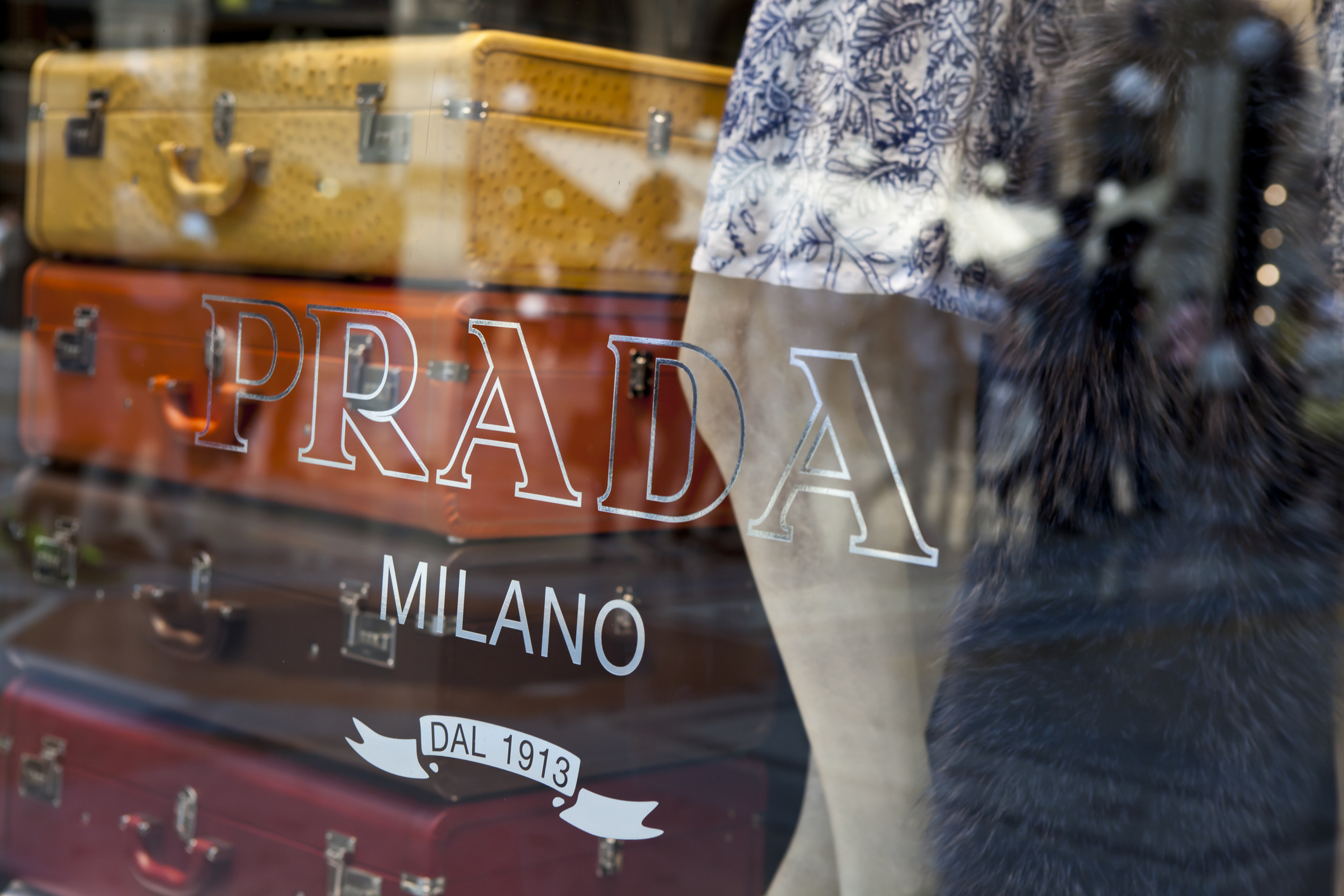
Prada
Per conoscere i risultati semestrali del Gruppo Prada bisognerà attendere il 30 luglio 2025.
Nell’attesa non ci resta dunque che fare qualche pronostico basato sui risultati dei trimestri precedenti e su quanto è noto del Gruppo e del mercato.
Nel primo trimestre 2025 il Gruppo Prada aveva realizzato ricavi netti consolidati di 1.341 milioni di Euro derivanti quasi esclusivamente dal retail che pesava per 1.216 milioni contro i soli 96 milioni del canale wholesale pari a solo il 7% del fatturato complessivo. Tali risultati corrispondevano ad una crescita a cambi costanti del 13% che è stato appunto il tasso di crescita delle vendite retail. Mentre la crescita delle vendite wholesale è stata solo del 7% e le royalties (pari solo al 2% del fatturato) sono cresciute del 15%.
Tutto quanto sopra con una distribuzione geografica delle vendite retail che, come già nel primo trimestre 2024, ha visto in testa la regione Asia-Pacifico con vendite di 438 milioni pari al 36% del fatturato retail complessivo, in seconda posizione l’Europa con vendite di Euro 334 milioni pari al 27% del fatturato retail complessivo, in terza posizione le Americhe con vendite di Euro 201 milioni pari al 16% del fatturato retail complessivo.
Infine un’altra informazione estremamente rilevante è quella per cui al 31 marzo 2025, le vendite di Prada sono state sostanzialmente stabili rispetto al primo quarter 2024, e che dunque la crescita del 13% è da imputarsi alla vertiginosa progressione delle vendite di Miu Miu che hanno visto un incremento nel primo quarter di oltre il 60%.
Quid dunque della semestrale al 30 giugno 2025?
A questo proposito si possono svolgere varie considerazioni. Innanzitutto, la grande rilevanza e la propulsione commerciale del marchio Miu Miu è presumibilmente continuata a livelli comparabili anche nel secondo semestre, sorretta anche dalla circostanza che il peso relativamente limitato del mercato americano dovrebbe tenere il Gruppo relativamente al riparo dalle contrazioni dei consumi osservate nelle Americhe nel secondo trimestre 2025.
Un pronostico diverso si può invece avanzare per il marchio Prada. Vi è infatti un evento rilevante avvenuto alla fine di giugno di quest’anno. Infatti il 23 giugno 2025 è stata annunciata l’improvvisa ed immediata interruzione della collaborazione con il CEO del brand Prada Gianfanco D’Attis senza la designazione di un successore nel ruolo che è stato assunto ad interim dall’amministratore delegato del Gruppo Andrea Guerra. Tale repentino cambio al vertice del marchio Prada giustificato con divergenze strategiche sembra rimandare ad una significativa insoddisfazione per la gestione del marchio e forse anche per i suoi risultati economici. Pure nel senso della ricerca di un redressement di Prada sembrano deporre le voci secondo cui il Gruppo Prada sarebbe alla ricerca di un manager di altissimo profilo a cui affidare il brand ammiraglio, tanto che si è fatto il nome di Francesca Bellettini che proprio da Prada aveva iniziato la propria carriera nel settore della moda prima di approdare a Gucci al seguito del CEO Giacomo Santucci e di essere promossa a posizioni di maggiore responsabilità nella Bottega Veneta di Marco Bizzarri.
Tutto quanto sopra fa pensare ad una contrazione dei risultati del marchio Prada. Con la conseguenza che è ragionevole aspettarsi nel secondo trimestre 2025 un trend di crescita del Gruppo meno marcato di quello del primo trimestre perché su di esso potrebbe pesare una perdita di terreno di Prada tale da parzialmente compensare negativamente la sicura crescita di Miu Miu.
Zegna
Alla stessa data del 30 luglio 2025, svelerà i propri risultati semestrali anche il Gruppo Zegna ed anche in questo caso si può provare a fare qualche previsione in base ai risultati del primo trimestre 2025.
Questo ha visto un marchio Zegna in crescita organica del 3,1% e unadjusted del 3,6%, un marchio Tom Ford in crescita organica del 3,8% e unadjusted del 3,5% ed un marchio Thom Browne in declino organico del 19,1% e unadjusted del 18,9%.
Per tutti e tre i marchi del Gruppo, i risultati pubblicati al 31 marzo 2025 raccontano una storia di crescita anche organica nel direct to consumer e di perdita di terreno nel wholesale. Tale perdita di terreno nel wholesale è stata estremamente significativa per Thom Browne il cui fatturato wholesale del primo trimestre è passato da 34,5 milioni di Euro nel 2024 a 18 milioni di Euro nel 2025. Una perdita del 48% per Thom Browne contro quella del 2% del marchio Zegna e dell’8% per Tom Ford.
Gli stessi risultati del primo trimestre restituiscono l’immagine di un fatturato di Gruppo ripartito fra
- una regione EMEA che rappresenta il 34% delle vendite e che è in declino di circa il 2% trascinata verso il basso dal netto declino di Thom Browne nel segmento wholesale tale da compensare la crescita a doppia cifra di Zegna e di Tom Ford;
- una regione Americhe che rappresenta il 27% delle vendite e che è in forte crescita di ben il 9% a livello consolidato sull’onda della robusta crescita a doppia cifra di Zegna particolarmente negli USA;
- un mercato Greater China che rappresenta il 27% delle vendite e che è in declino di oltre il 12% ed in cui tutti e tre i marchi fanno le spese della crisi dei consumi cinese;
- una regione Rest of APAC che rappresenta il 12% delle vendite e che è in crescita organica di oltre l’8% sorretta dalla crescita solida di tutti e tre i marchi nel mercato giapponese.
A mio modo di vedere, il secondo trimestre confermerà le tendenze di business di cui sopra con il solo caveat relativo al mercato americano, i cui consumi stanno perdendo terreno con la conseguenza che il trend di crescita osservato in quell’area nel primo trimestre potrebbe ragionevolmente subire un rallentamento con cui bisognerà fare i conti.
Gli Altri: Golden Goose, Elisabetta Franchi and Co.
Ma lo stato di grazia della moda italiana in questa tempestosa congiuntura non si ferma ai grandi Gruppi quotati e vede vari altri players capaci di generare crescita e guadagnare quote di mercato in un contesto i cui i mostri sacri francesi le perdono.
Prendiamo ad esempio Golden Goose che ha chiuso il primo trimestre 2025 con ricavi netti di 164,5 milioni di euro in crescita di ben il 12% rispetto all’omologo periodo del 2024. Una corsa decisamente alimentata dai ricavi direct to consumer che rappresentano il 76% dei ricavi, in crescita dal 71% del primo trimestre 2024. Una rete di negozi diretti che al 31 marzo 2025 contava ben 218 punti vendita monomarca e che ha visto una progressione del fatturato pari al 30% nella regione EMEA, al 13% nella Regione Americhe, e del 9% nella regione APAC che è tornata a crescere. Il tutto per un bilancio complessivo di crescita del segmento direct to consumer al 31 marzo 2025 pari al 19% a cui si contrappone un declino del wholesale (di cui già ho sottolineato sopra i problemi) che porta il risultato complessivo ad una comunque eccezionale crescita del 12% aggregato.
Ritengo che per Golden Goose il secondo trimestre confermerà ampiamente la traiettoria di crescita, nonostante gli inciampi del mercato americano. E ciò anche grazie ad una forte propulsione che viene per il marchio dai mercati medio-orientali.
Un altro marchio decisamente in controtendenza rispetto alla recessione della moda e del lusso è Elisabetta Franchi, oggetto del riposizionamento sapientemente orchestrato dal Presidente Marco Bizzarri e dal CEO Gabriele Maggio. E ciò per vari motivi.
Innanzitutto la crescita. Con risultati annuali dichiarati di 170 milioni di Euro, ritengo che il brand possa raggiungere molto presto la quota del fatturato annuale consolidato di 200 milioni di Euro. Quando un marchio viene riposizionato la crescita non è mai garantita (si veda Burberry per tutti) ma Elisabetta Franchi è una fulgida eccezione.
Poi le opportunità. Elisabetta Franchi si sta affacciando ora al mercato americano ed è praticamente assente dall’area APAC. Anche il peso dell’online è ancora molto limitato. Inoltre è un marchio fortemente centrato sull’abbigliamento il che rappresenta un’opportunità di crescita nei settori della pelletteria, degli accessori e delle calzature. Inoltre è un marchio esclusivamente donna e bambina, il che lascia aperta la questione di un’eventuale linea uomo.
Inoltre i segmenti commerciali. Anche qui in controtendenza rispetto al mercato. Degli oltre 700 punti vendita che distribuiscono il marchio, solo meno di 15 sono diretti. Il che significa due cose. Da un lato, un grande appeal ad un segmento wholesale che abbiamo visto essere oggi trascurato dalla maggior parte dei grandi marchi. Dall’altro, una grande opportunità di sviluppo del settore direct to consumer.
Infine la visione e la capacità di esecuzione di un marchio e di un team che riescono per esempio ad entrare nel mercato USA dalla porta principale assicurando una location nell’ambitissimo centro commerciale Bal Harbour di Miami ad un brand alle prime esperienze americane.
Ancora una volta un’eccellenza italiana capace di realizzare risultati del tutto distonici rispetto al new normal di recessione a cui gli dei del lusso francese ci hanno abituato.
Il Popolo di Navigatori.
Da bravo calabrese tanto legato al mare da avere la salsedine dentro il sangue, il mio povero nonno soleva dire che “un mare calmo non fece mai un buon marinaio”. Il mare della moda e del lusso è certamente in tempesta. E questa tempesta sta dimostrando che i migliori a domare le onde sono decisamente i gruppi italiani mentre le grandi corazzate del lusso francese, per anni ed anni regine dei mari, sembrano imbarcare acqua. Una conclusione che ritengo sarà confermata anche al prossimo cavallone delle semestrali. Perché gli italiani – si sa – sono un popolo di navigatori….
Cucinelli, Prada, Zegna and more: the Made in Italy groups challenging the crisis in the semi-annual test of the annus horribilis
The revenge of Italian groups after decades of French dominance?
The Annus Horribilis
There is little doubt left. The year 2025 will be remembered as an annus horribilis of contemporary history. The ongoing powerlessness – even of the new U.S. administration – to stop the conflicts in the Middle East and Ukraine, along with the heartbreaking humanitarian tragedies accompanying them. The ominous flashes of missiles filling the skies between Tel Aviv and Tehran with death and destruction. The U.S. trade wars continuing to raise tariff barriers, casting uncertainty and confusion across financial markets and among investors, businesses, savers, and consumers. The organized deportations of illegal immigrants – or presumed as such – in chains to the modern-day concentration camps guarded by barbed wire, masked guards, and even alligators. The arms race draining resources from sectors of solidarity and development: healthcare, welfare, education.
All of these are extremely serious and unprecedented events in recent contemporary history, heavily marking this 2025.
The Twilight of the Gods
Even our relatively small world of fashion is experiencing a 2025 characterized by a true twilight of the gods. The perennial top student, LVMH Fashion, posted a 5% decline in revenue in Q1 2025. The iconic Chanel announced 2024 results in 2025 marked by a 4.3% decline in revenues and a 28.2% plunge in operating profit. Not to mention the global fashion’s “sick men,” Gucci and its parent company Kering, which recorded, as of March 31, 2025, yet another negative quarter, with a Group-wide like-for-like revenue decline of 14% and a stock price at €173 on April 24, 2025 (after Q1 results were announced), compared to a peak of €798 in August 2021. Sic transit gloria mundi.
But that’s not all. After twenty years at the helm, François-Henri Pinault, representing the reference shareholder, had to give up the CEO role to bring in an external top-tier manager, Luca De Meo, to tackle an uncertain future full of difficult choices.
Also worth noting is the storm of preventive measures requested by the Milan Public Prosecutor’s Office, which in 2025 cast a shadow over the reputations of two global icons of Italian tailoring – Valentino and Loro Piana – accused of “negligently facilitating” labor exploitation of often undocumented Chinese workers through unqualified primary suppliers.
For the First Time in Twenty Years, Italian Stars Shine Brighter
In short, an Armageddon in the luxury Olympus that shakes the twenty-year-old certainties of a fashion system traditionally led in development and growth by large French conglomerates.
Indeed, in this dark night for global luxury, an unusual novelty emerges: it is that the Italian groups shine brightest, a trend already evident in recent quarters and, in my view, likely to be confirmed as of June 30, 2025, with the upcoming (and for Cucinelli, already published) semi-annual results.
Brunello Cucinelli
The standout case is Brunello Cucinelli, which published its semi-annual results on July 10, reporting robust revenues of €684 million, up +10.2% at current exchange rates (+10.7% at constant rates) compared to H1 2024. An exceptional result, especially considering that this double-digit growth is compared against a strong base (H1 2024 revenues were already up +14.1%) and confirms consistent, linear growth over two successive quarters of similar absolute value.
Notably striking is the geographic symmetry of the growth:
- Americas: +8.7% (+10.0% constant rates)
- Europe: +10.0% (+9.6% constant rates)
- Asia: +12.5% (+13.0% constant rates)
Particularly in Asia the performance goes against the trend (which accounts for over 28% of Cucinelli’s revenue), while for many competitors Asia is the sharpest pain point, with traditional luxury markets in the Far East in crisis.
China’s once-mighty luxury consumption engine has sputtered – both domestically and outbound – leading to recession in luxury markets in China, Japan, and Korea. Entire segments like South Korean duty-free are collapsing.
It is enough to consider that while Cucinelli reports double-digit growth in Asia in the first quarter of 2025, Gucci reported a contraction in retail sales of 25% in the Asia-Pacific area and 11% in Japan.
The data are obviously not entirely comparable because the levels of penetration in the aforementioned markets by the two brands are very different, and it is obviously easier to grow when (as in the case of Cucinelli compared to Gucci) there is more market space still to be conquered, but the divergence in the business trends of one and the other brand in the Asian continent is truly impressive.
Cucinelli’s business trajectory in the first half of 2025 also appears symmetrical when analyzed by sales channels, with:
- Retail up by +10.3%, and
- Wholesale up by +10.1%.
Here too, the data is significant and counter to the trend, especially considering that for Cucinelli, the wholesale channel represents over 36% of consolidated revenue. The current fashion market landscape is facing a veritable desertification of the traditional multibrand wholesale channel. Systematically abandoned by major brands due to precise and explicit commercial strategies aimed at acquiring revenue and cash-flow stability and customer experience control; oppressed by increasingly thin gross margins granted by the major maisons; pressured by ever more widespread openings of direct-brand stores and the competition from the online channels of those same brands; challenged by the proliferation of outlet centers that are ever more luxurious and sophisticated; and overwhelmed by the changing strategies of both brands and operators of the major fashion marketplaces, the traditional multibrand wholesale channel – once a great incubator of brands and trends – is today in deep crisis and can succeed commercially only in market contexts where brands have more difficulty in direct access, or within a system of integration with the brands themselves through monobrand franchise agreements. The size and growth of Cucinelli in this market segment therefore represents a countertrend sign of attention to an extremely important channel within the fashion system.A system that Cucinelli continues to support through active and consistent participation in the Pitti event, which has now been neglected by many Made in Italy brands and others.
The only remark on the intra-annual disclosure provided by fashion groups, and among these by Cucinelli, is that we would have been interested in greater visibility and granularity with reference to the performance of the online channel and to the strategies and investments pursued by the Group with reference to this line of business, which is evidently key also in order to evaluate the group projection towards the direct-to-consumer future of fashion.
Finally, based on the first sales of the Autumn-Winter 2025 collection, Cucinelli offers the markets a projection of consolidation of growth at 10% on an annual basis, forecasting that at the end of the year the economic results will show an overall growth of 10% compared to the previous year.
Prada
To know the half-year results of the Prada Group, we will have to wait until July 30, 2025.
In the meantime, all we can do is make some forecasts based on the results of the previous quarters and on what is known about the Group and the market.
In the first quarter of 2025, the Prada Group had achieved consolidated net revenues of 1.341 billion Euros deriving almost exclusively from retail, which accounted for 1.216 billion versus only 96 million from the wholesale channel, equal to only 7% of total revenue. These results corresponded to a growth at constant exchange rates of 13%, which was precisely the growth rate of retail sales. Meanwhile, the growth of wholesale sales was only 7%, and royalties (equal to only 2% of turnover) grew by 15%.
All of the above with a geographical distribution of retail sales that, as already in the first quarter of 2024, saw the Asia-Pacific region in the lead with sales of 438 million, equal to 36% of total retail turnover, in second place Europe with sales of 334 million Euros equal to 27% of total retail turnover, in third place the Americas with sales of 201 million Euros equal to 16% of total retail turnover.
Finally, another extremely relevant piece of information is that as of March 31, 2025, Prada’s sales were substantially stable compared to the first quarter of 2024, and therefore the 13% growth is to be attributed to the dizzying progression of Miu Miu sales, which saw an increase in the first quarter of over 60%.
What then of the half-year results as of June 30, 2025?
In this regard, various considerations can be made. First of all, the great relevance and commercial momentum of the Miu Miu brand presumably continued at comparable levels also in the second semester, also supported by the fact that the relatively limited weight of the American market should keep the Group relatively sheltered from the consumption contractions observed in the Americas in the second quarter of 2025.
A different forecast can instead be made for the Prada brand. In fact, there is a relevant event that took place at the end of June this year. On June 23, 2025, the sudden and immediate termination of the collaboration with the CEO of the Prada brand, Gianfranco D’Attis, was announced, without the appointment of a successor in the role, which was assumed on an interim basis by the Group’s CEO, Andrea Guerra.
This sudden change at the top of the Prada brand, justified by strategic divergences, seems to point to significant dissatisfaction with the management of the brand and perhaps also with its economic results. Also in the sense of seeking a redressement for Prada , rumors seem to point to the Prada Group looking for a top-profile manager to entrust with the flagship brand, so much so that the name of Francesca Bellettini has been mentioned — who had begun her career in the fashion sector precisely at Prada, before arriving at Gucci following CEO Giacomo Santucci and being promoted to positions of greater responsibility at Marco Bizzarri’s Bottega Veneta.
All of the above suggests a contraction in the results of the Prada brand. As a result, it is reasonable to expect a less marked growth trend for the Group in the second quarter of 2025 compared to the first quarter, because a loss of ground by Prada may weigh on it to such an extent as to partially negatively offset the expected growth of Miu Miu.
Zegna
On the same date of July 30, 2025, the Zegna Group will also unveil its half-year results, and in this case as well, it is possible to try to make some forecasts based on the results of the first quarter of 2025.
This showed the Zegna brand with organic growth of 3.1% and unadjusted growth of 3.6%, the Tom Ford brand with organic growth of 3.8% and unadjusted growth of 3.5%, and the Thom Browne brand in organic decline of 19.1% and unadjusted of 18.9%.
For all three brands of the Group, the results published as of March 31, 2025, tell a story of even organic growth in direct-to-consumer and a loss of ground in wholesale. This loss of ground in wholesale was extremely significant for Thom Browne, whose wholesale revenue in the first quarter dropped from 34.5 million Euros in 2024 to 18 million Euros in 2025. A 48% loss for Thom Browne versus a 2% loss for the Zegna brand and 8% for Tom Ford.
The same first quarter results provide the image of Group revenues divided among:
(i) an EMEA region that represents 34% of sales and that is in decline by about 2%, dragged down by the sharp decline of Thom Browne in the wholesale segment, enough to offset the double-digit growth of Zegna and Tom Ford;
(ii) an Americas region that represents 27% of sales and that is in strong growth of as much as 9% at a consolidated level, riding the wave of robust double-digit growth of Zegna, particularly in the USA;
(iii) a Greater China market that represents 27% of sales and that is in decline of over 12%, where all three brands are bearing the brunt of the Chinese consumption crisis;
(iv) a Rest of APAC region that represents 12% of sales and that is in organic growth of over 8%, supported by the solid growth of all three brands in the Japanese market.
In my view, the second quarter will confirm the above business trends with the only caveat relating to the American market, whose consumption is losing ground, with the consequence that the growth trend observed in that area in the first quarter could reasonably experience a slowdown that will have to be taken into account.
The Others: Golden Goose, Elisabetta Franchi and Co.
But the state of grace of Italian fashion in this stormy conjuncture does not stop with the large listed Groups and includes various other players capable of generating growth and gaining market share in a context in which the French sacred monsters are losing.
Take for example Golden Goose, which closed the first quarter of 2025 with net revenues of 164.5 million euros, growing by as much as 12% compared to the same period of 2024. A surge clearly driven by direct-to-consumer revenues, which represent 76% of revenues, up from 71% in the first quarter of 2024.
A network of directly operated stores that, as of March 31, 2025, counted as many as 218 monobrand points of sale and that saw revenue progression of 30% in the EMEA region, 13% in the Americas region, and 9% in the APAC region, which has returned to growth.
All of this adds up to an overall growth in the direct-to-consumer segment as of March 31, 2025, of 19%, countered by a decline in wholesale (whose problems I already highlighted above), which brings the overall result to a nonetheless exceptional aggregate growth of 12%.
I believe that for Golden Goose the second quarter will widely confirm the growth trajectory, despite the setbacks in the American market. And this also thanks to strong momentum for the brand from Middle Eastern markets.
Another brand decidedly counter-trend with respect to the recession in fashion and luxury is Elisabetta Franchi, the subject of a repositioning skillfully orchestrated by President Marco Bizzarri and CEO Gabriele Maggio. And this for various reasons.
First of all, growth. With declared annual results of 170 million Euros, I believe that the brand may very soon reach the threshold of 200 million Euros in consolidated annual revenue. When a brand is repositioned, growth is never guaranteed (see Burberry, for example), but Elisabetta Franchi is a shining exception.
Then the opportunities. Elisabetta Franchi is now entering the American market and is practically absent from the APAC area. The weight of online is also still very limited. Moreover, it is a brand strongly centered on clothing, which represents an opportunity for growth in the sectors of leather goods, accessories, and footwear. Additionally, it is a brand exclusively for women and girls, which leaves open the question of a possible men’s line.
Furthermore, the commercial segments. Also here, counter-trend with respect to the market. Of the over 700 points of sale that distribute the brand, only fewer than 15 are directly operated. Which means two things. On one hand, a great appeal to a wholesale segment that we have seen is now neglected by most major brands. On the other hand, a great opportunity for the development of the direct-to-consumer sector.
Finally, the vision and execution capacity of a brand and a team that, for example, manages to enter the U.S. market through the front door, securing a location in the highly coveted Bal Harbour shopping mall in Miami, for the brand’s first American experience.
Once again, an Italian excellence capable of achieving results completely out of sync with the recession which the gods of French luxury have made us accustomed to.
The Population of Navigators
As a good Calabrian so tied to the sea as to have salt in his blood, my poor grandfather used to say that “a smooth sea never made a good sailor.”
The sea of fashion and luxury is certainly in a storm. And this storm is showing that the best at mastering the waves are definitely the Italian groups, while the great French luxury battleships, for years and years queens of the seas, seem to be taking on water.
A conclusion that I believe will be confirmed also with the next wave of half-year results.
Because the Italians – as is well known – are a population of navigators…